How Paver Driveway Contractors Handle Excavation, Base Prep, and Drainage
A beautiful paver driveway is not won in the last hour of a project, when the pattern is laid and the surface suddenly looks finished. It is won in the first phase, when the contractor starts cutting into the site, checking grades, reading the soil, and deciding how the water is going to move after the first hard rain. That is where good paver driveway contractors separate themselves from crews that simply know how to place driveway pavers in a neat pattern.
Homeowners usually notice color, shape, border details, and whether they want concrete paver driveways, brick paver driveways, or natural stone driveway pavers. Those choices matter. But the long life of paver driveways depends far more on what happens below the surface. Excavation, paver driveway base preparation, and paver driveway drainage are the quiet parts of the job, yet they control whether the driveway stays level, sheds water, supports vehicles, and avoids the familiar failures people complain about, such as sunken driveway pavers, uneven driveway pavers, joint erosion, edge failure, and puddling.
When a residential paving contractor tells you the project will start with site preparation and grading, that is not filler language. It is the core of professionally installed driveways.
The driveway fails from the bottom first
I have seen attractive paving stone driveways begin to settle within a year because the excavation was too shallow by just a few inches. I have also seen older concrete driveway replacement projects where the pavers themselves were still in great shape after many years, but sections had dipped because runoff from a roof valley kept saturating one corner of the base. In both cases, the surface got the blame. The real problem was beneath it.
A paver driveway installation is a system. The pavers on top distribute load. The bedding layer helps with final adjustment. The compacted aggregate base carries weight and spreads it across the subgrade. The subgrade is the native soil that ultimately supports the whole assembly. Drainage protects every layer from saturation and movement. If one part is weak, the rest eventually shows it.
That is why skilled residential driveway paving crews spend so much time on things homeowners rarely see after the job is complete. Good new driveway construction is part engineering, part craft, and part site-specific judgment.
Excavation is not just digging until it looks deep enough
The first serious decision in the driveway paver installation process is excavation depth. There is no universal number that fits every property, which is why experienced paver driveway contractors inspect the site before giving confident answers. Soil type, slope, expected vehicle loads, existing driveway elevation, garage threshold height, local drainage patterns, and whether the project is a full driveway replacement or an extension all affect the plan.
For residential driveway paving, the crew usually removes enough material to account for the full thickness of the finished system. That includes the pavers, the paver driveway bedding layer, and the compacted aggregate base. If the site has weak subsoil, expansive clay, or evidence of prior settlement, more excavation may be needed so unsuitable material can be removed and replaced. In many cases, driveway excavation depth for vehicles ends up significantly greater than what would be acceptable for a patio or walkway. A contractor who builds pedestrian spaces and vehicle-rated driveway pavers the same way is making a costly mistake.
In Southern California paver driveways, especially in places like Pasadena and across the San Gabriel Valley, excavation also has to respect drainage and elevation transitions. A driveway cannot rise so high that it sends water toward the garage, nor can it trap runoff along the house. On sloped properties, driveway grading before paving becomes even more sensitive because the surface has to remain usable for cars while still guiding water away safely.
There is another detail good contractors catch early. Existing concrete, old asphalt, tree roots, buried utility lines, and thickened aprons near the street can all affect demolition and removal. Homeowners asking about asphalt driveway replacement with pavers or cracked concrete driveway replacement are often surprised that removal is not a cosmetic step. It is part of setting up the right substructure for durable driveway surfaces.
What contractors are checking before the base goes in
Excavation exposes the site’s reality. Once the old material is removed, the crew can evaluate the driveway subgrade preparation with clear eyes. This is the point where real experience matters most. A polished estimate is one thing. Recognizing pumping soil, hidden soft spots, or old trench backfill is another.
A solid contractor looks for bearing capacity, moisture problems, and consistency. If one wheel path sits over compacted native soil and the other sits over loose utility backfill, the driveway will not age evenly. The pavers may look perfect on day one, but over time one side can begin to settle. That is the kind of paver driveway installation mistake that often shows up as tire rutting or isolated low spots.
Subgrade preparation usually includes reshaping, moisture adjustment if needed, and compaction. Preparing soil for driveway pavers sounds simple until you watch it done properly. Soil that is too dry may not compact well. Soil that is too wet can pump and deform under equipment. The crew may need to scarify the surface, adjust moisture, recompact, and proof-roll the area to identify weak zones. It is slow work, but it protects the finished surface.

This phase also answers one of the most common homeowner questions, can driveway pavers support cars and heavier vehicles? Yes, they can, but only if the support structure underneath is designed for that load. Heavy duty driveway pavers and proper paver thickness help, but strong pavers paver driveway resources over a weak base still fail.
The aggregate base is where strength is built
Once the subgrade is sound, the crew starts building the compacted aggregate base. This is the structural layer that does the hard work every day. It spreads wheel loads, resists settlement, and helps control moisture movement. If you hear a contractor talk about driveway base material, they are talking about one of the most important cost and performance decisions in the job.
Most paver driveway base preparation uses crushed aggregate with fines that compact tightly. The exact specification varies by region, soil conditions, and whether the system is standard or permeable. For standard interlocking driveway pavers, the goal is a dense, stable base installed in lifts and compacted thoroughly. Dumping a full base depth at once and running a plate compactor over the top is not professional work. Proper crews install aggregate in layers, compact each lift, and verify grade repeatedly.
This is also where driveway paving equipment matters. A plate compactor has its place, but larger driveways often need heavier compaction equipment for the aggregate base. On a small decorative driveway paving project, compactors and screed rails may be enough. On a larger residential driveway reconstruction, especially with heavier vehicle use, the crew may use rollers or more robust compacting tools to achieve a dense, even platform.
Good base prep does not feel dramatic while it is happening. The site just starts to look cleaner, flatter, and more deliberate. But this is the phase that largely decides paver driveway durability. When homeowners compare pavers versus concrete driveways or pavers versus asphalt driveways, they often focus on the surface material. In reality, the installation quality beneath paver driveways can make them outperform a poorly built slab or asphalt surface over time, particularly when repairs are needed. Individual pavers can be lifted and reset. Failed slab sections usually require cutting, demolition, and patching.
Drainage is designed, not hoped for
The most expensive paver driveway drainage problems usually come from one simple assumption, that water will somehow find its way out. It often does not. Water sits, saturates the base, erodes fines, softens subgrade, and then the driveway starts moving. By the time the homeowner notices loose driveway pavers or pooling near the garage, the problem has already been developing below the surface for months or years.
Driveway grading and drainage should be solved before the first paver is installed. Contractors look at more than the driveway itself. They check downspouts, yard runoff, neighboring grades, the street connection, and any low points near structures. A proper paver driveway slope helps surface water move off efficiently, but drainage design also has to manage what happens after the water reaches the edges.
On some properties, the answer is simple grading. On others, the contractor may incorporate driveway drainage channels, area drains, or a permeable paver driveway system. Water pooling on driveway surfaces is not always caused by the surface itself. Sometimes the driveway is collecting runoff from side yards, planter beds, or roofs. If those contributing flows are ignored, even a well-laid paver field can struggle.
In Pasadena driveway renovation work, this comes up often on older homes with driveways that were built in pieces over decades. The original grade may have worked before a garage addition, a raised walkway, or new landscaping changed runoff patterns. A smart driveway paving contractor Pasadena homeowners can trust will not just trace the existing slope and repeat old mistakes. They will study where the water enters, where it concentrates, and where it can be directed safely.
Permeable systems change the base, not just the joints
Permeable concrete pavers and other water permeable driveway surfaces deserve special mention because homeowners sometimes assume they are standard pavers with wider joints. They are not. A true permeable paver driveway uses an entirely different drainage concept.
Instead of pushing all water off the surface, pervious driveway paving allows water to pass through joints and enter permeable paver base layers below. Those layers typically use open-graded aggregate that stores water temporarily and lets it infiltrate into the soil or move toward a drainage outlet. This approach can reduce driveway stormwater runoff and help with driveway runoff control on properties where traditional grading is difficult or where municipalities encourage infiltration systems.
Permeable versus standard pavers is not a purely aesthetic choice. It affects excavation, base design, edge restraint details, maintenance, and cost. A permeable system can be an excellent driveway paving solution, but only if the soil and site conditions support it. Clay-heavy sites with slow infiltration may still need underdrains or overflow planning. That is why experienced paver driveway contractors evaluate permeability in context rather than treating it as a one-size-fits-all upgrade.
The bedding layer is thin, precise, and often misunderstood
After the structural base is compacted and graded, contractors place the paver driveway bedding layer. This is usually a thin layer of bedding sand or a specified screening material that allows the pavers to be set evenly and adjusted with precision. It is not there to make up for poor base work.
That distinction matters. If the base is wavy, some installers try to correct it with extra bedding material. The surface may look fine when they leave, but over time the thicker bedding layer can shift, leading to paver driveway leveling issues and surface movement. The bedding layer should be uniform and controlled. Final paver driveway leveling depends on accurate screeding and careful placement, not on hiding a rough base.
This is where skilled craftsmanship shows. A driveway can have the right paver thickness, excellent paver compressive strength, and attractive driveway paver color options, yet still feel uneven if the bedding layer is sloppy. Conversely, even small format paving stones can look and perform beautifully when the setting bed paving contractors near me is clean and exact.
Edge restraints keep the whole field locked together
Interlocking paver installation depends on confinement. Without edge restraints, pavers gradually spread under traffic, especially on curves, aprons, and edges where cars turn. This is one reason driveway paver edge failure is such a clear sign of poor installation. If the edge is weak, the field will eventually loosen.
Paver driveway edge restraints can be concrete curbs, hidden restraint systems, or other engineered methods suited to the project. The best choice depends on the layout, the paver style, and how much vehicle stress the edges will see. On custom paver driveways with decorative borders, the restraint strategy often has to balance appearance with structural control.
I have seen elegant modern driveway paving projects where every visible surface was beautifully selected, textured driveway pavers, contrasting driveway paver borders, slip resistant driveway pavers for the apron, but the edge support near the planting bed was an afterthought. Two rainy seasons later, the outer band had started to creep. The lesson is simple. Decorative driveway paving still needs hard-nosed structural discipline.
Laying pattern and compaction affect strength more than many homeowners realize
Some driveway paver layout ideas are stronger than others under vehicle traffic. The herringbone driveway paving pattern remains a favorite for good reason. It locks units together effectively and handles braking and turning forces well. Running bond can work in some contexts, but it is generally less resistant to movement under vehicles. For residential driveway paving Pasadena and elsewhere, contractors who understand load behavior will often steer clients toward patterns that perform as well as they look.
After placement, paver driveway compaction brings the system together. The compactor helps seat the pavers into the bedding layer, tighten the interlock, and prepare the joints for filling. This stage must be done with the right equipment and pads to avoid surface damage, especially with some surface finishes or large format driveway pavers.
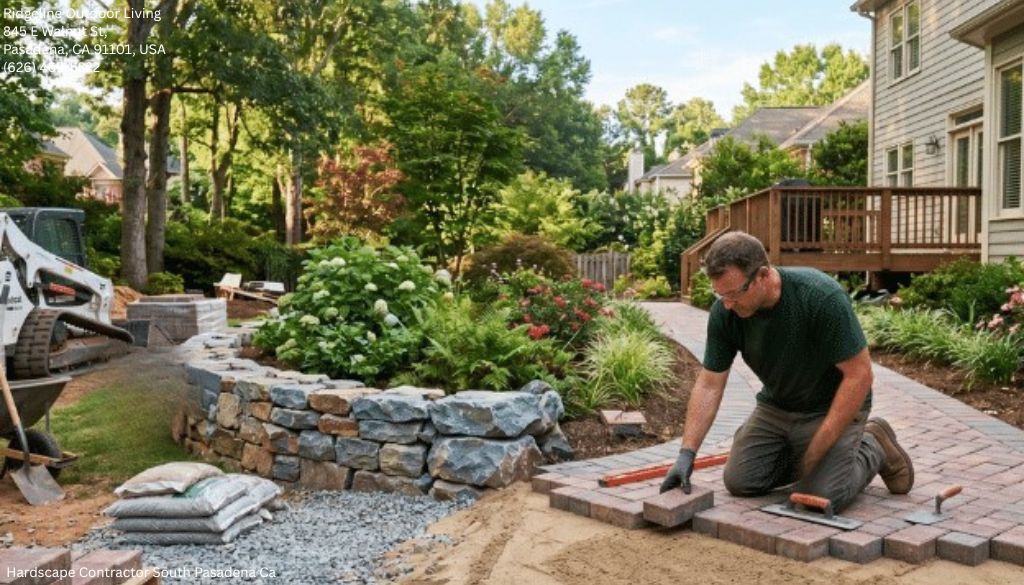
Next comes driveway paver joint filling, often with polymeric sand or another specified jointing material. The joints matter more than many homeowners think. They help transfer loads, maintain interlock, and reduce movement. Weak or washed-out joints contribute to pavers shifting, edge movement, and weed growth between driveway pavers. Polymeric sand driveway maintenance is not glamorous, but keeping those joints intact protects the whole system.
Why cheap paver bids usually hide risk in the ground
When homeowners compare driveway paving estimates, the most dramatic differences often come from excavation, base depth, and drainage allowances. The surface material may be similar, but one quote includes proper driveway excavation costs, thicker base sections, disposal of unsuitable soil, and drainage installation, while another assumes everything under the site is ideal. That second estimate can look appealing until the first wet winter or the first summer of repeated vehicle traffic exposes shortcuts.
Paver driveway installation cost is not just about the visible pavers. It reflects labor, demolition, hauling, aggregate, compaction time, drainage work, edge restraints, and finishing. In many driveway installation cost breakdowns, excavation and base work consume a surprisingly large share of the budget. That does not mean a contractor is overcharging. It usually means they are pricing the work that keeps the driveway from failing.
Concrete paver driveway pricing also varies because not all pavers are equal. Vehicle rated driveway pavers, heavy duty driveway pavers, and products with higher wear resistance often cost more. But even premium driveway pavers cost less in the long run if the structure beneath them is built correctly. Paver driveway long term value comes from service life, repairability, and performance, not just from paver driveway design & installation day-one curb appeal.
Common failures usually trace back to three causes
When a homeowner calls about repairing interlocking driveway pavers, I generally expect one of three root issues. First, the excavation was too shallow or inconsistent. Second, the base was under-compacted or built with the wrong material. Third, drainage was ignored or oversimplified. Those three causes account for a huge share of driveway paver settlement, joint erosion, low spots, and recurring repair calls.
Surface symptoms vary. You may see loose driveway pavers near the apron, water pooling on driveway sections, cracked edge bands, or isolated depressions in tire paths. The visible damage is only the clue. The actual repair method depends on the underlying problem. Releveling driveway pavers works well when the affected area is localized and the rest of the structure is sound. It does not work as a permanent fix if the subgrade remains soft or drainage continues to saturate the base.
That is one of the practical advantages in the paver driveway versus concrete cost conversation. Pavers can often be repaired surgically. A failed poured surface usually requires more disruptive replacement. But easy repair should never be an excuse for poor installation. Professionally installed driveways should not need structural correction early in their life.
What a careful homeowner should ask before work begins
You do not need to become a paving expert to judge whether a contractor understands the job. You do need to ask specific questions that reveal whether they treat site preparation as real construction or as a quick setup step.
- How deep will you excavate for this site, and what factors could change that depth?
- What base material will you use, and how will it be compacted in lifts?
- How will surface water and runoff from surrounding areas be managed?
- What pattern and paver thickness do you recommend for vehicle traffic?
- How will the edges be restrained, especially at curves, borders, and the driveway apron?
A serious contractor should answer clearly, with reasoning tied to your property. Vague assurances are not enough.
Climate and local conditions shape good decisions
Driveway paving for California homes has its own set of realities. Southern California driveway design often deals with intense sun exposure, periods of dry soil shrinkage, and sudden heavy storms that reveal every drainage mistake at once. In warm paver driveway services pasadena ridgelineoutdoorliving.com climates, UV stability, color retention, and heat reflection may matter more than freeze-thaw resistance, though drainage still remains non-negotiable. Driveway paver sun exposure can affect color selection, surface comfort, and maintenance schedules, especially on broad, unshaded driveways.
For paver driveways Pasadena homeowners are considering, there is also the matter of architectural fit. Traditional homes often suit brick driveway paving or smaller interlocking concrete paving stones with classic borders. More contemporary homes may lean toward large format driveway pavers, restrained color palettes, and sleek driveway paver border designs. Those design choices matter for curb appeal, but performance still starts underground. The prettiest custom driveway paver layouts will not rescue a weak base.
The best-looking driveway is usually the best-built driveway
There is a certain calm look to a well-made paver driveway. The lines stay straight. The joints are consistent. Water does not sit. The transitions at the garage, sidewalk, and street feel intentional. Cars do not create dips or ruts. Years later, the driveway still looks composed.
That kind of result is rarely accidental. It comes from a contractor who respects the boring parts of the job. They excavate to the right depth. They handle driveway subgrade preparation carefully. They install a compacted aggregate base in lifts, not in a rush. They build drainage into the plan instead of reacting to it after the fact. They use proper edge restraints, choose a pattern that suits vehicle traffic, and compact and fill joints correctly.
If you are investing in driveway paving stones, concrete driveway pavers, or any other form of interlocking driveway pavers, judge the contractor less by their sales language and more by their process. Ask how they handle paver driveway site preparation. Ask where the water will go. Ask what happens if the exposed soil is weaker than expected. Those answers tell you whether you are buying a surface, or a system that will hold up.
That is the real difference between a driveway that merely looks finished and one that is built to stay that way.